
For the past five years or so, we have been compiling, reviewing and extending the relatively scant scientific evidence about musculoskeletal injuries and sign language interpreting (SLI).
Continue reading “Trouble signs”Kathryn Woodcock, PhD CCPE ICAE PEng
Professor

For the past five years or so, we have been compiling, reviewing and extending the relatively scant scientific evidence about musculoskeletal injuries and sign language interpreting (SLI).
Continue reading “Trouble signs”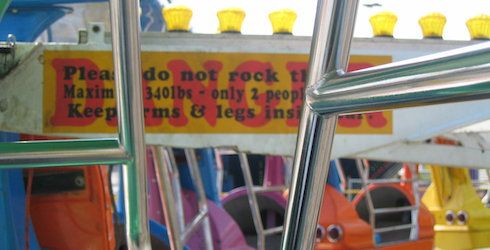
Decision-making succeeds when the decision produces a desirable outcome and fails when it produces an undesirable outcome. Decision-making can fail when a person does not perceive, ignores, cannot understand, or gives improper weight to a piece of relevant information.
Continue reading “Decision making: words and meaning”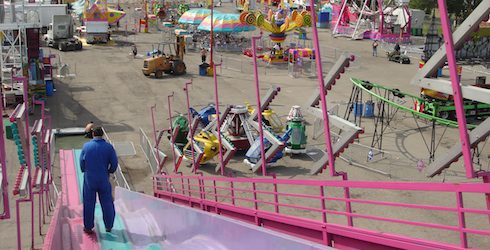
Human factors research is focused on solving authentic end-user problems. The first key to solving a problem is to define it and authentically understand the problem. The only way to do that is through engagement with end users and the problem domain. If I want to solve a problem related to amusement rides, then I have to spend time on the midway. I have to spend time not just looking at them but listening to them. If I focus on “efficiency” of the use of my time, I risk seeing them as the variables and comparing them to the norms I bring with me. If I want to solve their problems, I need to muster the generosity to spend enough time to understand what features of the midway are actually constants.
Continue reading “Where is the lab?”Through this blog, I will comment on human factors engineering and ergonomics (HF/E), so a fair starting point is what does HF/E mean to me?
Continue reading “Where did I come from and where am I now?”A trip to a theme park or carnival is often the highlight for families and friends every year. Although amusement riders are rarely injured on rides, most investigation reports have found that the riders behaved incorrectly prior to the accident event. A Canadian researcher is looking to change this through her research on amusement ride safety.
Continue reading “Rider Behaviour: Keeping amusement rides safe and enjoyable”Fischer, S., Woodcock, K. 2009. Prevention of musculoskeletal disorders: Toward evidence-based workload norms for Sign Language Interpreters in Canada. Proceedings of the Association of Canadian Ergonomists. CD-ROM, 6 pages.
OHSforSLI – download the guide
Woodcock, K., Fischer, S.L. 2008. Occupational Health and Safety for Sign Language Interpreters Workplace Safety & Insurance Board Research Advisory Council Grant #0532. Toronto: Ryerson University.
Continue reading “OHS and Ergonomics for Sign Language Interpreters”Woodcock, K., 2008. Content analysis of 100 consecutive media reports of amusement ride accidents. Accident Analysis and Prevention 40, 89–96. Link
Continue reading “Paper: Content analysis of 100 consecutive media reports of amusement ride accidents”Woodcock, K., Pole, J.D., 2008. Educational Attainment, Labour Force Status and Injury: a comparison of Canadians with and without deafness and hearing loss. International Journal of Rehabilitation Research 31, 297–304.
Continue reading “Educational attainment, labour force status and injury: a comparison of Canadians with and without deafness and hearing loss”In Deaf Professionals and Designated Interpreters, external link A New Paradigm, external link. (Hauser, Finch & Hauser, 2008) Washington DC: Gallaudet University Press.
Continue reading “Academic and Educational Interpreting from the Other Side of the Classroom: Working with Deaf Academics”