Dr. Kathryn Woodcock is Professor at Toronto Metropolitan University, teaching, researching, and consulting in the area of human factors engineering / ergonomics particularly applied to amusement rides and attractions, including broader safety issues of performance, error, investigation and inspection, and assessment of eligibility to participate.
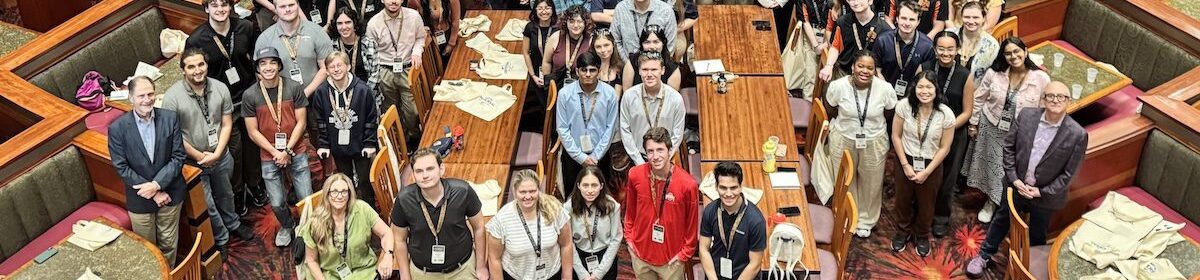
Response to the 2026 Open Qualifying stage of the Toronto Metropolitan Thrill Design Competition was strong! We were able to invite teams from 35 universities to compete at the Invitational in November. Team rosters and rooming configurations are due September 09.
Teams will travel for arrival on November 11 (Wednesday).
The program begins early November 12 (Thursday)
Challenge presentations are scheduled Friday through Sunday.
IAAPA Expo Educational programming begins November 16 (Monday). The record-breaking exhibit halls open on November 17 (Tuesday) following the IAAPA Official Opening “kickoff” session, at which students can hear what the industry itself considers the most remarkable achievements and trends of the past year.
Due to the capacity limitations, we cannot invite every interested club/group to a challenge. We have offered the opportunity for non-competing clubs/groups to send a small Development Program delegation to observe on Saturday / Sunday AND receive IAAPA Expo admission. Interested clubs/groups may be in touch with us. We have a form for teams to request to be added to our mailing list. Any clubs/groups added through August 31 will receive information about the Development Program.
Faculty guiding student teams or making decisions about giving academic consideration to student participation at the Toronto Metropolitan University Thrill Design Competition may wish to review some past publications about the competition to understand its design as a learning experience, and its results to date. Links are provided to some publications.
Paper presented to 2024 Themed Experience and Attractions Academic Symposium
Engineers contribute to attraction design, manufacture, systems integration, construction, installation, commissioning, and regulatory approval of attractions including amusement ride and show components from multiple manufacturers sourced from around the world, to be operated at venues ranging from major fixed-site theme parks to travelling carnivals.
Some branches of engineering education explicitly identify an application domain, but no specific theme park and amusement ride engineering program exists, nor is establishment of one likely. This paper begins a discussion of complementary learning goals applicable to engineers aspiring to theme park engineering careers.
Curricular considerations for engineering in themed entertainment
Kathryn Woodcock, PhD CCPE ICAE PEng Professor, Toronto Metropolitan University
Background
Engineers contribute to attraction design, manufacture, systems integration, construction, installation, commissioning, and regulatory approval of attraction components. Engineers work for manufacturers, owner-operators and their consultants, and regulators, among various important roles serving major fixed-site theme parks and travelling carnivals alike.
Hospitality, business, and creative design and production students can and do find undergraduate and graduate programs focused on theme parks and attractions. While a few engineering education programs explicitly identify an application domain, such as mining, automotive, aerospace, nuclear, or biomedical engineering, there is no domain-specific engineering curriculum for most industries, including theme park and amusement ride engineering. Engineers can readily work in other domains by ethically applying general engineering knowledge. Through this experience, as well as focused professional development, engineers accumulate domain-specific knowledge.
To a non-engineer, engineering may seem to be a singular profession. To an engineer, it is a myriad of different specialties. The branches share fundamentals in mathematics and sciences, analysis, and synthesis, and ethical obligations, which consider business ethics, legal compliance, and a paramount duty to the welfare of the public affected by their work.
Engineering students commit early in their education to a branch of engineering, such as civil, electrical, mechanical, or industrial.
The curriculum for each branch is accredited to its own educational standard, through The Accreditation Board for Engineering and Technology (ABET), Canadian Engineering Accreditation Board (CEAB), or other regional counterpart.
Each engineering student and trainee will follow their interest within their branch of engineering toward a subfield, which through professional opportunities and mentoring becomes reinforced by experience and accumulated knowledge. Some engineers acquire additional knowledge in several, typically related, subfields. Many engineers supplement their technical skills with project management.
To satisfy their theme park interests in the absence of formal courses, engineering students form or join design clubs, participate in competitions, attend industry conferences, and pursue industry internships (Woodcock, 2019).
This paper begins a discussion of a complementary curriculum to benefit engineers aspiring to theme park engineering careers by looking at observed gaps in engineering students’ knowledge.
Methodology
The current report recaps observations from learning and teaching in engineering education, mentoring university engineering students in theme park club activities including arranging dozens of behind-the-scenes tours and construction site visits since 2001, resourcing students attending industry round-table events including ASTM International Committee F24 and AIMS International, and directing and producing eight editions of an international student competition with over 800 alumni to date, many of whom were engineering students.
Future steps of the project will include review of in-service education needs as assessed by major employers and qualitative data collected from engineers at various experience stages.
Observations
Engineering students have shown strong skill at using engineering analysis techniques and researching the technical function of amusement devices. They are aware of types of components, and calculations for mechanical and structural design. Through extracurricular research, many are familiar with applicable amusement device safety standards. They can often combine this knowledge to innovate new device functions. However, gaps have been seen in their understanding of the interface between engineering and other design decisions in this industry. Engineering students in general need to know more about several things, including the following topics.
Strengths and gaps observed in engineering student knowledge of amusement attractions engineering. (Note. “ARD” refers to Amusement Ride or Device.)
Narrative or experiential purpose of attractions. The movement and function of engineered ride and show systems must serve and enhance the story or experience, and must not be obnoxious or detrimental. Engineers can design machines and show elements to produce technical performance, but need to understand what technical performance elicits the physical and emotional guest responses needed to meet entertainment goals.
Design to deliver the intended experience with minimal risk. The engineering design brief is to serve the creative intent of “fun”, “wonder”, or “thrill”, not to deliver an arbitrary technical product. Multiple approaches may fulfill the creative intent. While proximity to heavy equipment, elevation, speed, and acceleration are commonly present in amusement rides and their hazards can be mitigated using design and operational means, design choices should eliminate hazards not needed to achieve the creative intent.
Human variability and how to mitigate vulnerabilities. Attractions are experienced by the public at large, with varied sensory limitations and tolerances, limb configurations, agility, and sizes that affects what they can understand and do. Guests bring diverse backgrounds that affect what is comfortable and familiar. When students think of differences, they often itemize requirements to measure up to the attraction’s requirements rather than design requirements to make the attraction work for a diverse audience, even when designing from a blank page when almost anything is possible.
Business purpose of attractions, and operating considerations. Attractions exist for business reasons, not technical reasons or even creative reasons. For its capital cost, operating cost, and the opportunity cost of the space it requires, an attraction needs to deliver a certain capacity and guest satisfaction to be viable. To avoid excess operating costs, designs must be easy for guests to understand and use correctly. Designs must co-exist with adjacent attractions for guest satisfaction.
Roles and interaction of engineers and other professions, trades, and artisans. Student engineers who begin their career pursuit as fans may be aware of “imagineering” and aspire to graduate and work in that role. Because of the “‑ineering” part of the portmanteau, young people may infer that the imagineer is a person who is an engineer that plays the role of creative director.
Many people within the collective referred to as “imagineering” are engineers. However, people showcased by name as “the” imagineer are neither early-career nor are they typically people originally educated as engineers.
Engineering students with these aspirations need to learn about many complementary roles with different academic backgrounds that comprise the collective entity of “imagineering”. Students should learn that the term “imagineering” is associated with one of many companies in the attractions industry that includes theme park and amusement attractions engineering.
Other professions include art direction, story writing, architecture, interior design, landscape architecture, costume design and theatrical specialties. These professions work within a deep industry supply chain structure including vendors, consultants, contractors, and regulators.
With this knowledge, engineering students will be better able to conceive their role as engineers within this team, or indeed to recognize that their aspirations are in a profession other than engineering.
Implications for Scholars/Industry
While there are things engineering students need to learn to excel in themed entertainment engineering, the post-secondary engineering curriculum is full. In one accredited engineering program, for example, students have only three free liberal electives among 46 courses across four years. The technical courses required to meet accreditation standards focus on general principles applicable to any technologies, not about specific types of technologies, let alone specific devices.
While the engineering curriculum is full, some of the above gaps may be addressed by courses designed to qualify as liberal electives, fittingly as the creative intent of entertainment falls within the liberal arts disciplines. Other gaps may be addressed with modules such as case studies or exercises developed to fit in core courses. Continued research is necessary to define the learning goals and explore paths to implementation.
A court in Greece has reportedly sentenced owners and liable personnel over a fatal injury in August 2024. The owner of a Halkidiki amusement park was sentenced to life in prison, with his co-owner/wife sentenced to 9 years for complicity, the certifying engineer to 13 years, and the ride operator to 6 years.
This post revisits an earlier topic of piecemeal reporting on ride accidents, and the impact on the general public who do not have time to scour the internet, laws, regulations, standards, and ride catalogs for more information.
Since 2010, “Team WLSL” from the aquatics industry has produced a worldwide day of swimming lessons. Taking place 2026 June 25, many local host locations including waterparks and other aquatic facilities will have learn-to-swim and water safety skills events. Tens of thousands of people will participate around the world. Look for an event near you.
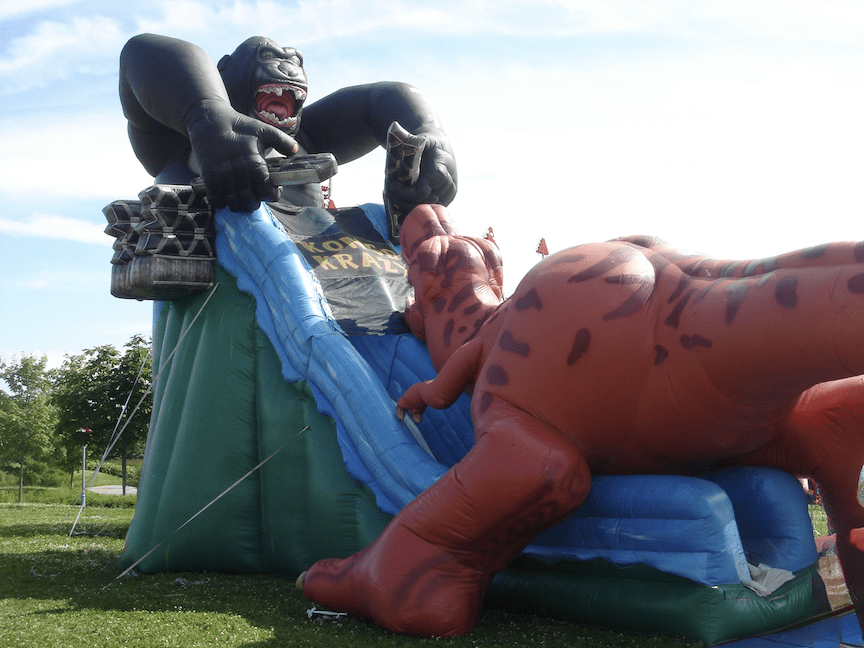
Too often, the news inquiry begins, “An inflatable device has blown away in the wind. ” This post addresses the most common background information requested or needed to answer the questions asked.
Just last week (2025 August 14), there was a scary ride accident involving a derailment of a Wacky Worm kiddy coaster in England. As concerning as the accident was, the BBC News media report and Wales Online reports were very well done. Then this week (2025 August 18) comes a news clip from The National Herald headed “Four injured when Rhodes amusement park ride breaks” with a full-width photo of a Wacky Worm. Two Wacky Worm accidents in one week? Let’s see.
Teams have completed their registrations for the 2025 Toronto Metropolitan University Thrill Design Competition Open Qualifying stage with tremendous growth in the event.
A lingering theme over the 25 years of research and consultation in this industry is that people look at the attractions industry as an escape from reality. Part of the reason is that this industry has mastered illusion, and hiding the difficult, technical things that make your day at the park an escape from your reality. From time to time, there are studies that show how much is going on behind the curtains.
University theme-park clubs are becoming more common. Amusement rides and theme-park-going is a familiar activity for most students. To tell stories or deliver immersive experiences begins with the crafting of the story or theme itself, and numerous creative disciplines contribute to the project execution, including architecture, landscape architecture, environmental graphics, interior design, set design to tell those stories in compelling places. They also contain a variety of technologies, from structures and mechanisms to digital media to deliver the immersive storytelling. The choice of which stories and experiences will be presented is based on strategic decisions, extensive economic analysis, and business analytics. Theme parks also contain the management of operational processes from guest-facing hospitality and service delivery to team-facing management and support of diversified employee cohorts, including entertainment and creative fields.