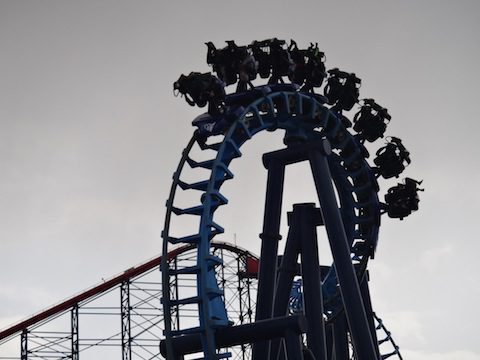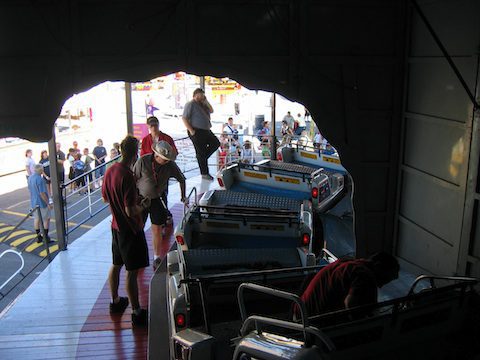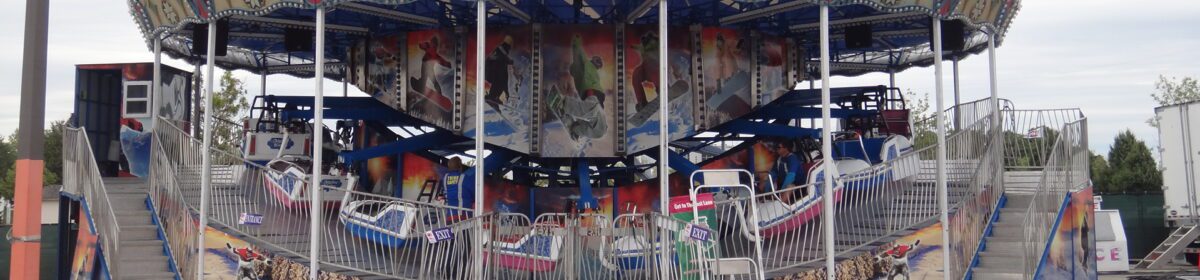
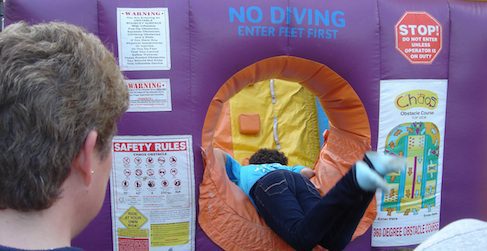
There is considerable diversity from jurisdiction to jurisdiction about portable carnival ride inspection. However no rides go uninspected.
Continue reading “Amusement ride safety: who “does” it?”Kathryn Woodcock, PhD CCPE ICAE PEng
Professor

There is considerable diversity from jurisdiction to jurisdiction about portable carnival ride inspection. However no rides go uninspected.
Continue reading “Amusement ride safety: who “does” it?”
I just finished reading “Theme Park Design: Behind the scenes with an engineer” by Steve Alcorn. I picked it up at the Bookstore during the IAAPA Expo in Orlando last month and took advantage of the flight home to read quite a lot of the way through. The book describes in a very realistic way how talented people make plans–and adapt to reality–using examples from his own career in show engineering with a number of theme parks, as employee and as contracted consultant, including many examples from his role in the organization now known as Walt Disney Imagineering and particularly the construction and launch of Disney’s second Florida park: Epcot. The book clearly differentiates the many specializations required to conceive, design, plan, build, test, and operate an amusement attraction.
Continue reading “Accessible theme parks”
Any service involves queueing, whether it is a doctor’s office or public transit. The queue is the area where you wait for service. Sometimes you are literally in a line and other times you are more of a herd, and sometimes you’re lucky enough to arrive at the point of service to find no one waiting (instabus!) but queueing is a fact of life. Waiting to ride an amusement ride typically involves a queue, and this becomes sort of the folklore or fiction of the activity.
Continue reading “In the queue”I would like to thank the Academy, er, the Executive Council of the Association of Canadian Ergonomists for designating me a Fellow of the Association at the 2011 Annual Meeting.

Johnson, R., Woodcock, K., Abdoli-E., M., 2011. Factors in subjective workload in sign language interpretation. Proceedings of the Association of Canadian Ergonomists, London ON, 18-20 October, 6 pgs.
Abdoli-E., M., Johnson, R., Fischer, S., Woodcock, K., 2011. Dynamic loading of upper extremity joints with sign language. American Society of Biomechanics, Long Beach CA, August 1.
As Labour Day approaches, thoughts turn to teaching. There are those who think research is what academics really prefer to do, that research entails hiding in the lab or library far from real problems, and that we teach only under duress. However, that has certainly not been my experience with either teaching or research.
Continue reading “Teaching”
For the past five years or so, we have been compiling, reviewing and extending the relatively scant scientific evidence about musculoskeletal injuries and sign language interpreting (SLI).
Continue reading “Trouble signs”
Decision-making succeeds when the decision produces a desirable outcome and fails when it produces an undesirable outcome. Decision-making can fail when a person does not perceive, ignores, cannot understand, or gives improper weight to a piece of relevant information.
Continue reading “Decision making: words and meaning”
Human factors research is focused on solving authentic end-user problems. The first key to solving a problem is to define it and authentically understand the problem. The only way to do that is through engagement with end users and the problem domain. If I want to solve a problem related to amusement rides, then I have to spend time on the midway. I have to spend time not just looking at them but listening to them. If I focus on “efficiency” of the use of my time, I risk seeing them as the variables and comparing them to the norms I bring with me. If I want to solve their problems, I need to muster the generosity to spend enough time to understand what features of the midway are actually constants.
Continue reading “Where is the lab?”